Skip to content
Peoria Foundation

Serving Peoria and nearby areas

Water in Basement in Peoria, IL

Water in a Peoria basement after rain or snow melt tells you where the ground or the sewer is getting in, and a free inspection pins down the source before you pay for a fix.

Book a free foundation inspection

Tell us what you are seeing. A local specialist calls you back the same business day.

Local to Peoria

We connect property owners in Peoria and nearby areas, including West Bluff, North Side, North Valley, South Side, Grandview Drive and East Peoria, with one independent local foundation repair specialist.

  • A high water table each spring

    USDA says Ipava soil, common in Peoria County, can have a water table 1 to 2 feet below the surface from January to May. A basement floor sits several feet deeper than that.

  • Record storms

    On April 17 and 18, 2013, Peoria set daily rain records of 2.47 and 1.37 inches. The Illinois River crested at a record 29.35 feet at Peoria on April 23, 2013.

  • Old sewers in old neighborhoods

    The City of Peoria says the oldest parts of town have combined sewers that carry both sewage and storm water. In heavy rain they fill up, which is why some basements get water up the floor drain.

What it costs

Typical published ranges for Peoria. The contractor's written estimate is the price, and the inspection is free.

WorkTypical range
Inspection and written estimate Free
Basement waterproofing in Peoria $1,900 to $7,700
Interior drain along the basement wall $40 to $120per linear foot
Sump pump installed $600 to $2,500
Exterior waterproofing in Peoria $82 to $116per linear foot

See typical foundation repair prices in Peoria

Where is the water showing up?

The place you find water is the best clue to why it is there. Look closely the next time it happens, before you mop it up.

Along the base of the wall

A wet line where the wall meets the floor. This is the most common spot. Water in the soil is pushing in under or through the bottom of the wall.

Through a crack

A crack darkens or drips during a storm. Water is finding the easy way in.

Through block or mortar joints

The face of a block wall is damp, or water runs down from the joints. Old mortar has worn thin.

Up through the floor

Water pools in the middle of the floor or seeps up through floor cracks. The water table under the house is high.

Up the floor drain

Water, sometimes dirty or smelly, comes up the drain in a big storm. This is often the sewer, not the soil.

At a window well

Water pours in under a basement window. The well is full of leaves or has no drain.

Near the chimney or a pipe

Water comes in where a pipe or flue passes through the wall.

On cold pipes and walls in summer

Beads of water with no rain. That is condensation from humid air, not a leak.

When does it happen?

Timing is the second clue. Write it down each time.

After a hard rain only

Often gutters, downspouts or a yard that slopes toward the house.

During snow melt or a thaw

Water pooling against the wall and soaking down while the ground below is still frozen.

For days after a wet spell

A high water table. The soil around and under the house is full.

During river flooding

Homes on low ground near the Illinois River can see groundwater rise with the river.

Why basements get wet in Peoria

Peoria gets about 37.5 inches of rain and melted snow in a typical year, per the National Weather Service. May and April are the wettest months. That water lands on soil that drains slowly.

The two most common soils in Peoria County are Rozetta and Ipava, by USDA acreage. Ipava has a clay-rich subsoil, and USDA says its water table can rise to 1 to 2 feet below the surface from January to May. Your basement floor sits well below that. When the soil fills up, water looks for the easiest way in, and that is usually the joint where the wall meets the floor.

Age adds to it. About 2 in 5 Peoria homes were built before 1960. Many of those basements have block, brick or stone walls with no drain at the footing. Mortar that was solid when the house was new has worn down.

In the oldest parts of town, there is one more cause. Combined sewers carry both sewage and rain water. In a big storm they can fill and push water back up basement floor drains.

Cosmetic, annoying or urgent?

Usually cosmetic

White chalky crust on a wall that has been dry for years. Damp spots only in muggy summer weather.

Fix it soon

Water at the base of the wall every spring. A crack that leaks in each storm. A sump pump that runs all the time.

Urgent

Water near the furnace, water heater or electrical panel. Sewage coming up a drain. Water along with a wall that bows in or a crack that keeps growing.

Water is also what pushes on basement walls. A wall that leaks every spring is a wall that is soaking in wet, heavy soil. That is why the inspector checks the walls for movement, not only for water.

How it usually gets fixed

The right fix depends on the source. That is why the source matters before you pay for anything.

Gutters and downspouts

The cheapest fix. Clean them and carry water several feet from the wall.

Regrading

Build up the soil so it slopes away from the house.

Crack injection

Seals a single leaking crack in a poured wall.

Interior drain and sump pump

A drain is set under the floor along the wall. It catches water and sends it to a sump pump. This is the most common full fix.

Exterior waterproofing

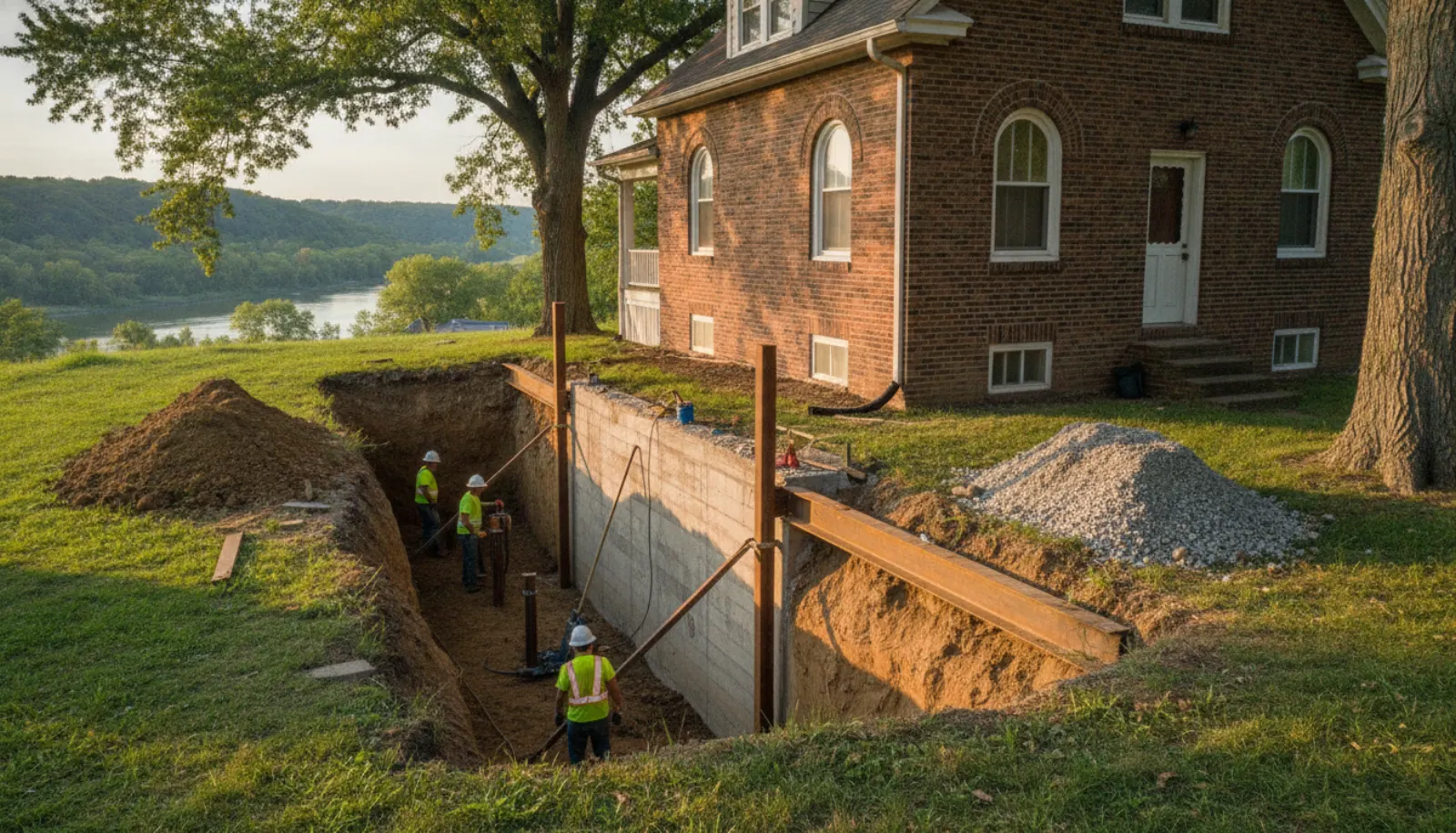
The crew digs along the outside, coats the wall and adds a drain. It costs more and is used when the outside must be fixed.

Backflow valve or overhead sewer

For sewer backup. A plumber usually does this work.

One local cost guide puts basement waterproofing in Peoria at about $1,900 to $7,700. These are typical ranges, not a quote. The written estimate lists the source the crew found and every foot of drain.

What to do before the inspection

Take photos or video while it is wet

Show where the water comes in, not just the puddle.

Note the date and the weather

Hard rain, slow rain, thaw or river flood.

Test the sump pump

Pour a bucket of water into the pit and watch it run.

Check gutters and downspouts

Clear them and extend the downspouts.

Lift things off the floor

Move boxes, rugs and stored items away from the wet area.

Check your insurance

Sewer backup is often covered only with an added endorsement.

Frequently asked questions

Why does my basement only leak in the spring?

Late winter and spring are when the ground is wettest. The snow melts, frost comes out of the soil and the heaviest rain falls. In common Peoria soils the water table can rise to within 1 to 2 feet of the surface from January to May.

Is water coming up through the floor drain a foundation problem?

Usually not. Water that rises up a floor drain in a big storm is often a sewer backup. The fix is a backflow valve or an overhead sewer, not a wall drain.

Will sealing the inside of the walls with paint stop the water?

It can help with damp walls. It rarely stops water that is pushing in at the base of the wall or through a crack. That water needs somewhere to go, which is why drains and sump pumps are the usual fix.

Does a wet basement mean my foundation is failing?

Not by itself. Many wet basements have sound walls. But water against a wall year after year is what makes block walls bow and mortar wear out, so it is worth fixing early.

My house is up on the bluff, not by the river. Why is my basement wet?

River flooding is only one cause. Most wet basements in Peoria come from rain and snow melt soaking the soil around the house. Steep yards on the bluffs can send extra runoff toward the walls.

Will the city help pay?

For sewer backup, yes in some cases. The city says it pays 75 percent, up to $3,500, of an overhead sewer and sump pump conversion, and 75 percent, up to $1,200, of a backflow valve, for homes on a city-owned sewer main.

Find out where the water is coming from

Call (309) 245-0953 or send the short form. A local crew will come out for free, trace where the water gets in, and give you a written price for the fix that matches the source.

(309) 245-0953 Free inspection