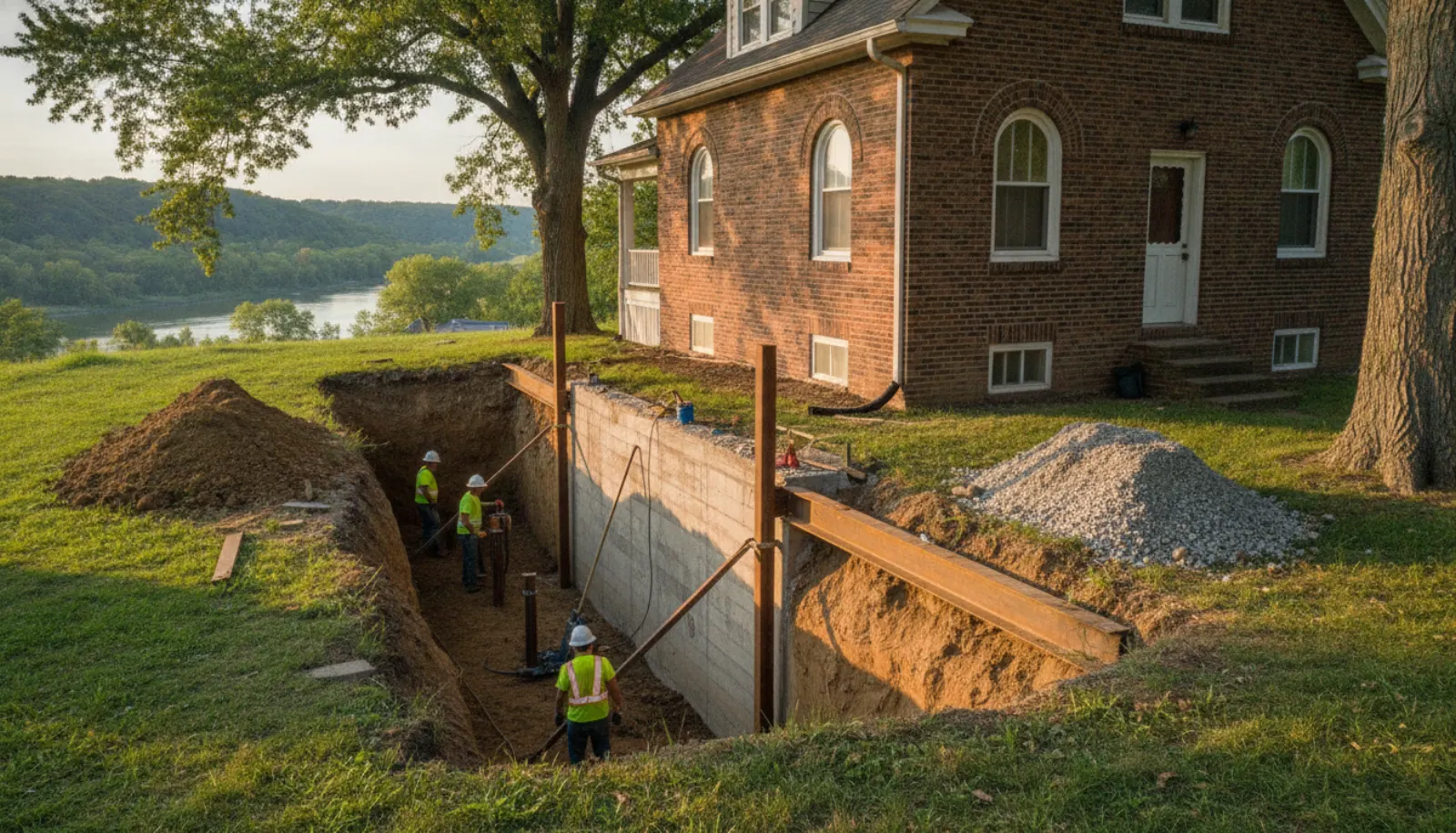
Why houses sink in Peoria
Peoria sits where the Illinois River valley meets high bluffs. The city even gave its name to the Peoria Silt, the windblown soil that covers much of the Midwest. Different parts of town have different soil, and each moves for its own reasons.
On the bluffs and near ravines. USDA describes Hickory soils, found on the bluffs and ravines in this area, as till with up to 20 inches of loess on top, on slopes of 5 to 70 percent. Homes near a slope can sit partly on fill that was pushed in to level the lot. Fill packs down over time. On a steep slope, soil can also creep downhill a little each wet season, pulling the downhill side of a house with it.
Heavy rain makes it worse. On April 17 and 18, 2013, Peoria set daily rain records of 2.47 and 1.37 inches, per the National Weather Service. In those rains, backyards in East Peoria slid down a ravine, and seven homes were later bought out with a $2 million state grant.
On flatter ground. Ipava soil has a clay subsoil and a high water table in late winter and spring. Soft, wet soil under one corner can let that footing sink. A leaking downspout or broken drain line at one corner keeps the soil there wetter than the rest.
Frost under shallow footings. The City of Peoria requires footings at least 36 inches deep, and Peoria County uses 42 inches. Porches, additions and older homes were not always built that deep. Frost lifts them in winter and drops them in spring, and over the years they settle lower.
Trees. Large trees close to the house pull water from the soil in dry summers. The soil shrinks, and that corner drops.