Skip to content
Peoria Foundation

Serving Peoria and nearby areas

Cracks in Brick in Peoria, IL

Cracks in the brick on a Peoria home can be worn mortar or a foundation that has moved, and a free inspection tells you which one before you pay for either fix.

Book a free foundation inspection

Tell us what you are seeing. A local specialist calls you back the same business day.

Local to Peoria

We connect property owners in Peoria and nearby areas, including West Bluff, North Side, North Valley, South Side, Grandview Drive and East Peoria, with one independent local foundation repair specialist.

  • A lot of old brick

    The West Bluff Historic District covers about 365 acres of homes, with building periods from 1875 to 1924 listed by the National Park Service. About 1 in 5 Peoria homes was built in 1939 or earlier.

  • Hard winters on masonry

    The City of Peoria's design rules rate concrete weathering here as severe. Water soaks into mortar, freezes and swells, then thaws, many times each winter.

  • Frost depth

    The city requires footings at least 36 inches deep, and Peoria County uses 42 inches. Older homes and porches were not always built that deep, and shallow footings move with frost.

What it costs

Typical published ranges for Peoria. The contractor's written estimate is the price, and the inspection is free.

WorkTypical range
Inspection and written estimate Free
Tuckpointing or repointing brick $5 to $25per square foot
Crack sealing or injection $200 to $1,000per crack
Piers to support a settling corner $1,000 to $3,000each

See typical foundation repair prices in Peoria

What the cracks look like

Walk around the outside of the house on a dry day. Look at each wall from a few steps back, then up close. These are the patterns Peoria homeowners see most.

Stair-step cracks

The crack zigzags up through the mortar joints, often from a corner of the house or a window.

A crack wider at one end

It is a hairline at the bottom and a quarter inch at the top, or the reverse.

A straight vertical crack

It runs up through the bricks and the mortar, often near a corner.

Cracks over windows and doors

They start at the corners of the opening and run up or sideways.

Bricks that stick out

One part of the wall has pushed out past the rest.

A gap by the chimney

The chimney leans away from the house, or a crack runs down the joint between them.

Crumbling or sandy mortar

Mortar falls out when you scratch it with a key.

Cracks that match the inside

A crack outside lines up with a drywall crack or a sticking door inside.

Two causes: worn mortar or a moving foundation

Every brick crack in Peoria comes down to one of two things. Knowing which one saves money.

Worn mortar. Mortar is softer than brick on purpose. Over decades, rain soaks in, freezes, swells and thaws. Each winter takes a little more. The joints go sandy and hairline cracks spread across the wall. The wall itself has not moved. This is a masonry job, not a foundation job.

A moving foundation. When part of the footing under a brick wall sinks or heaves, the brick above cannot bend. It cracks along the weakest line, which is the mortar. That is the stair-step pattern. The crack is often wider at one end because one end of the wall dropped more.

Clues that point to the foundation:

The crack is wider at one end

One part of the wall has moved more than the rest.

The bricks no longer line up

One side of the crack sits higher or sticks out.

The crack grows

Pencil marks at the ends show it getting longer.

Inside signs too

Doors stick, floors slope or drywall cracks on that side of the house.

Why brick cracks in Peoria

Old brick homes. Peoria has a lot of them. The West Bluff Historic District alone covers about 365 acres of homes, with building periods from 1875 to 1924 listed by the National Park Service. About 1 in 5 Peoria homes was built in 1939 or earlier. Mortar that old has taken more than 80 winters.

Freeze and thaw. The City of Peoria rates concrete weathering here as severe in its design rules. That means water gets into masonry and freezes again and again. Walls that face the weather, and joints near downspouts, wear fastest.

Frost under shallow footings. The city now requires footings at least 36 inches deep. Porches, additions and older chimneys were not always built that deep. Frost can lift them in winter and drop them in spring, and the brick cracks where they meet the house.

Slopes and fill. Homes on the bluffs and on the edges of ravines can sit partly on fill or on slopes that creep. One corner settles more than the others, and the brick shows it first.

When is it cosmetic, and when is it urgent?

Usually cosmetic

Thin hairline cracks spread evenly across a wall. Sandy mortar with no other signs. Cracks that have looked the same for years.

Get it checked soon

A stair-step crack wider than about a quarter inch. A crack wider at one end. A chimney gap you can fit a finger in.

Urgent

Bricks bulging out or loose. A chimney that is clearly leaning. Cracks along with a wall bowing in the basement.

How it usually gets fixed

The fix follows the cause.

Tuckpointing

Old mortar is ground out and new mortar is packed in. This fixes worn joints. On an old house, the mortar should be soft enough to match the brick.

Crack repair and brick replacement

Cracked or loose bricks are replaced and the joint is rebuilt.

Lintel repair

A rusted steel lintel over a window is cleaned, painted or replaced, and the brick above is relaid.

Piers

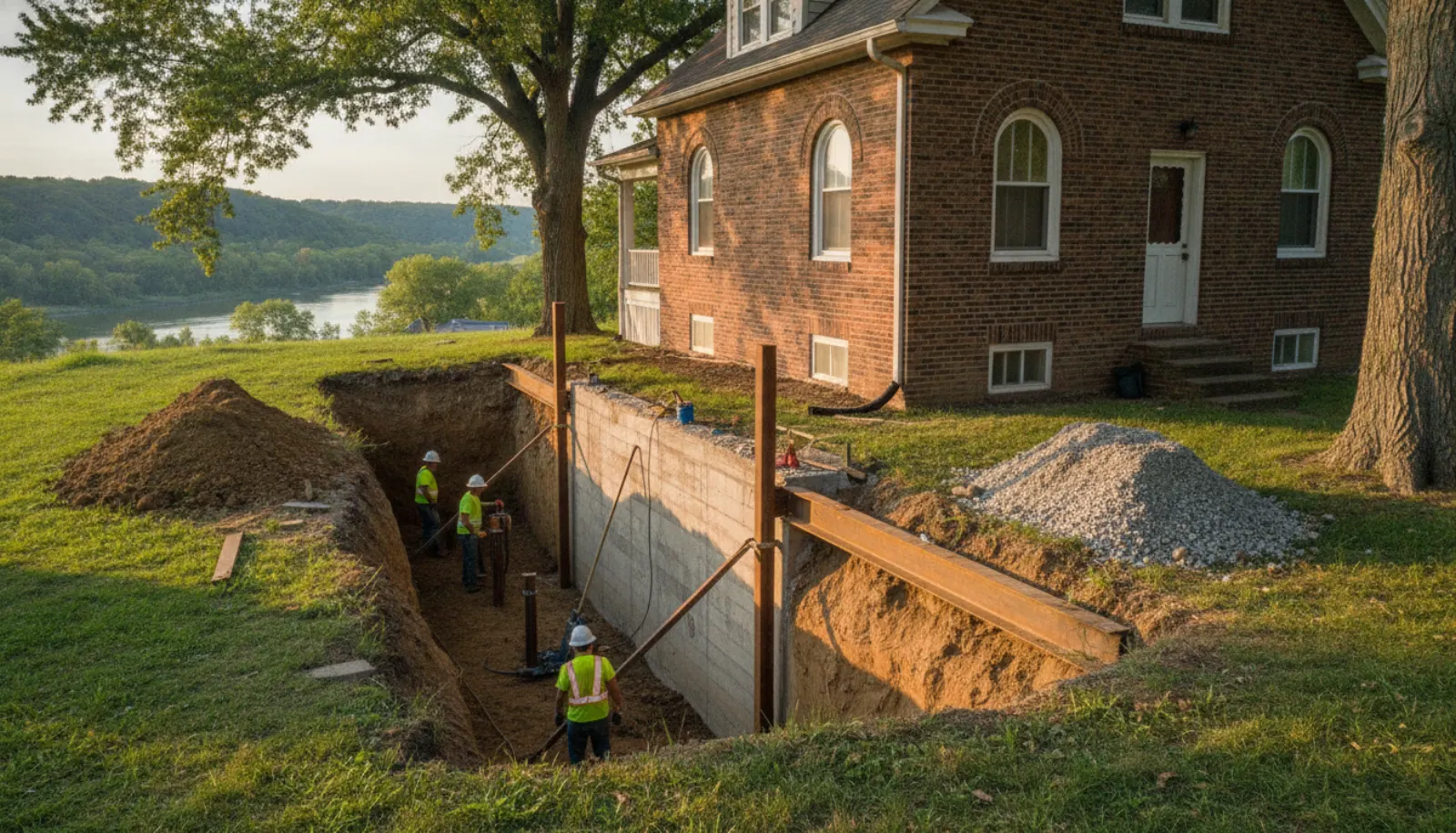
If a corner has settled, steel piers are set under the footing to hold it up and sometimes lift it back.

Water control

Downspouts and grading are fixed so the soil under the wall stays drier.

Published guides put tuckpointing at about $5 to $25 per square foot. Sealing a single crack runs about $200 to $1,000, and piers run about $1,000 to $3,000 each. These are typical ranges, not a quote. A good estimate fixes the cause first and the brick second, so the crack does not come back.

What to do before the inspection

Mark the ends of each crack

With a pencil and the date.

Take photos

With a coin or tape measure for scale.

Look inside

On the same wall for cracks, sticking doors or a sloping floor.

Check the downspouts

Near the crack and make sure they drain away.

Leave the patching

Until you know the cause.

Frequently asked questions

Are stair-step cracks in brick always a foundation problem?

No. Old mortar wears out and cracks on its own, mostly on walls that get the most rain and sun. Stair-step cracks that are wider at one end, or that keep growing, point more to movement under the wall.

Can I just fill the crack with mortar or caulk?

You can, but it can hide the problem. If the wall is still moving, the crack comes back. Have it checked first, then patch once you know the cause.

Why does the crack open in winter and close in summer?

Brick and the soil under it move with the seasons. A crack that opens and closes a little each year is often seasonal movement. A crack that is a bit wider each year is a reason to call.

What does a crack over a window mean?

It can be the steel lintel over the window rusting and swelling, which lifts the brick. It can also be the wall settling. The fix is different, so the inspector checks both.

My chimney is pulling away from the house. Is that the foundation?

Often it is the chimney's own footing. A chimney is heavy and sits on a small footing, so it can settle or tip on its own. It still needs a look, since a gap can let water in.

Know what the crack means

Call (309) 245-0953 or send the short form. A local crew will look at the brick and the foundation under it for free, tell you which problem you have, and give you a written price.

(309) 245-0953 Free inspection